

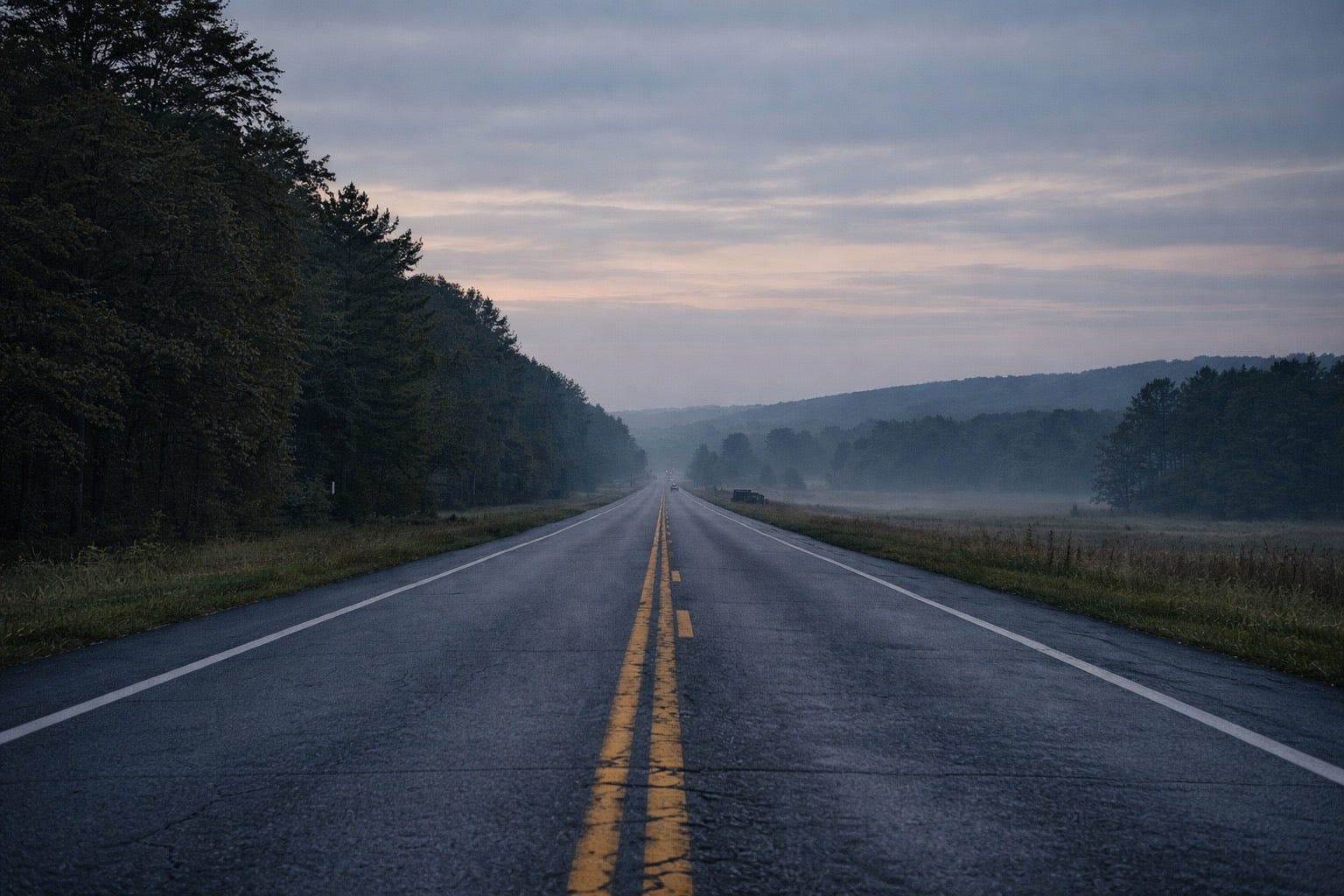
Driving has always been more than transportation.
For generations, it has marked independence. Freedom. A clear line between childhood and adulthood. Getting your license wasn’t just practical. It meant something.
That’s why a simple family dinner conversation caught me off guard.
A few nights ago, I mentioned how quickly self-driving technology is improving. I talked about cars navigating dense and chaotic city traffic during rush hour in Manhattan, waiting their turn at narrow one-lane bridges, behaving less like machines and more like experienced drivers. Almost casually, I said that within a decade, most cars on the road will likely be self-driving.
My 11-year-old son went quiet.
Then he asked a question that tugged at my heartstrings.
“Papa, do you think I won’t ever get to drive?”
For him, driving isn’t a distant idea. It’s something he’s been working toward. It’s the big sized power wheels, go-kart tracks, the racing simulators, and the endless tinkering in our cars. It’s a milestone he’s been preparing for and ocassionally checks in on, “Papa, do you think I’m tall enough to drive?”
I told him the truth as best I could. It will take decades to fully clear human-driven cars from public roads. He’ll get his license. He’ll drive.
But I also believe we’ll reach a tipping point where driving becomes optional, then unusual, then unnecessary. Not because it was banned, but because society gets used to new modes and expectations of transportation.
The next generation of “drivers” may mostly be riders.
Like the woman who gave birth in a Waymo. Like kids who grow up never needing to think about steering wheels or pedals. They won’t miss driving because they never needed it.
That’s when I realized this shift isn’t just technological or economic. It’s cultural.
Just as many of us never learned to use rotary phones or develop film, future generations may look at driving the same way. Something people used to do. A skill that once mattered, then didn’t.
When technology changes behavior at that level, it doesn’t announce itself. It doesn’t ask permission. It simply becomes normal.
The question isn’t whether self-driving works.
It’s what happens when a rite of passage quietly disappears.
And whether we notice when it does.
About Me
I’m Phil Nowak, a Lead Principal Customer Success Manager at Salesforce, where I’ve spent 11 years working with multi-billion dollar global companies across nearly every industry.
I’m a graduate of MIT’s Artificial Intelligence Business Strategy program, Salesforce’s Accelerate Leadership Program, and I majored in Economics with a Business Minor at Indiana University Bloomington. Go Hoosiers!
I write The Frontier Shift to help people understand how technology, capital, and infrastructure are actually reshaping the world.
Feedback? Send me a message or connect with me below.
LinkedIn | X | Subscribe | 📍 Chicago
Views expressed are my own.