

The Signal
AI is moving so fast that even Apple needs Google, choosing speed over purity.
The Big Deal
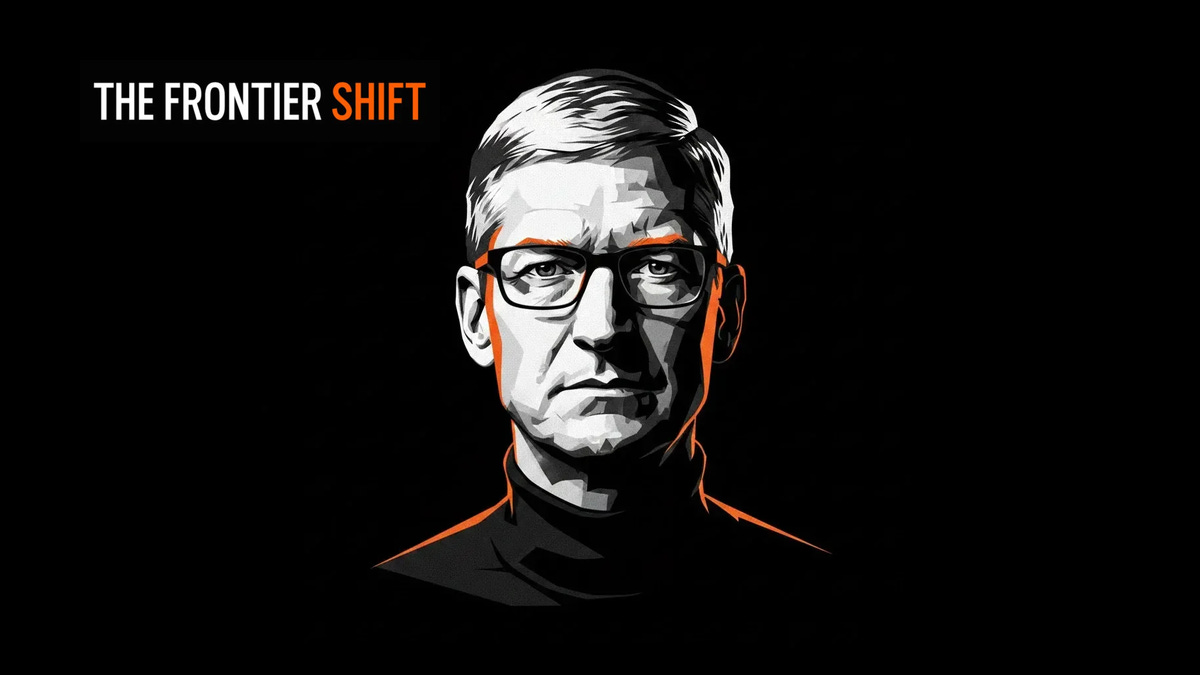
Apple and Google just announced a multi-year deal where Gemini AI will power the next generation of Siri, launching later this year.
Apple evaluated OpenAI and Anthropic but ultimately chose Google’s technology as “the most capable foundation” for Apple Foundation Models.
Key facts:
Roughly $1B per year reported deal
Google’s Gemini estimated around 1.2 trillion parameters versus Apple’s current ~150B
Apple maintains its privacy via on-device processing and Private Cloud Compute
OpenAI’s ChatGPT integration remains (for now)
Three Implications
Market dynamics
Wall Street wanted this. Every analyst segment about Apple eventually lands on the same critique: strong hardware, lagging AI. This deal buys credibility. Both stocks reacted positively.
Regulatory risk
There is real AI competition today. OpenAI, Anthropic, xAI, others. Still, regulators may scrutinize the combined influence of Apple and Google across devices, operating systems, and default software.
That conversation is coming.
Apple’s playbook
Apple has done this before. Lean on partners like Intel, Qualcomm, and Google Maps until in-house solutions are ready. This fits the pattern. The difference is the clock is now much faster and the stakes are higher. To that point, they’re already building a 1 trillion parameter model for 2027.
Plain English:
Apple has been struggling to build competitive AI for Siri while OpenAI’s ChatGPT, Anthropic’s Claude, xAI’s Grok, and Google’s Gemini have raced ahead.
This deal lets Apple use Google’s advanced models to train their own, buying time while they catch up.
The question is whether Apple can fully replace Google later, or whether AI becomes a permanent dependency.
The Frontier Shift
When I first heard the news, I was shocked. I never imagined these two tech behemoths partnering like this.
My first thought: Would Steve Jobs have done this deal?
Probably not.
Jobs included Google Maps in the 2007 iPhone launch at the last minute. But he came to despise Google after they “copied” iOS features for Android. By 2012, he’d developed Apple Maps and booted Google as the default.
Jobs believed Apple should lead innovation, not follow it. He famously said customers don’t know what they want—Apple tells them. And he insisted Apple should own everything in-house to control design, security, and its destiny.
But here we are. Tim Cook cut a deal with Google to power Siri.
It was their only choice.
That’s how fast AI is moving. The entire industry is racing to train models, secure compute, and lock in energy supplies. Elon Musk thinks we’ll hit AGI by 2026, or 2030 at the latest.
The Apple-Google partnership proves how quickly even an industry leader can fall behind.
The frontier is always shifting.
On This Day

🗓 January 13, 1942: Henry Ford received a patent for a plastic automobile, which was 30% lighter than a regular steel car.
Ford’s “soybean car” used agricultural plastics in its construction, pioneering the use of lightweight composite materials in manufacturing.
This innovation foreshadowed today’s use of advanced materials in electric vehicles, robotics, and aerospace.
Breakthroughs do not always come from software first. Often, they start with materials.
Quoteworthy
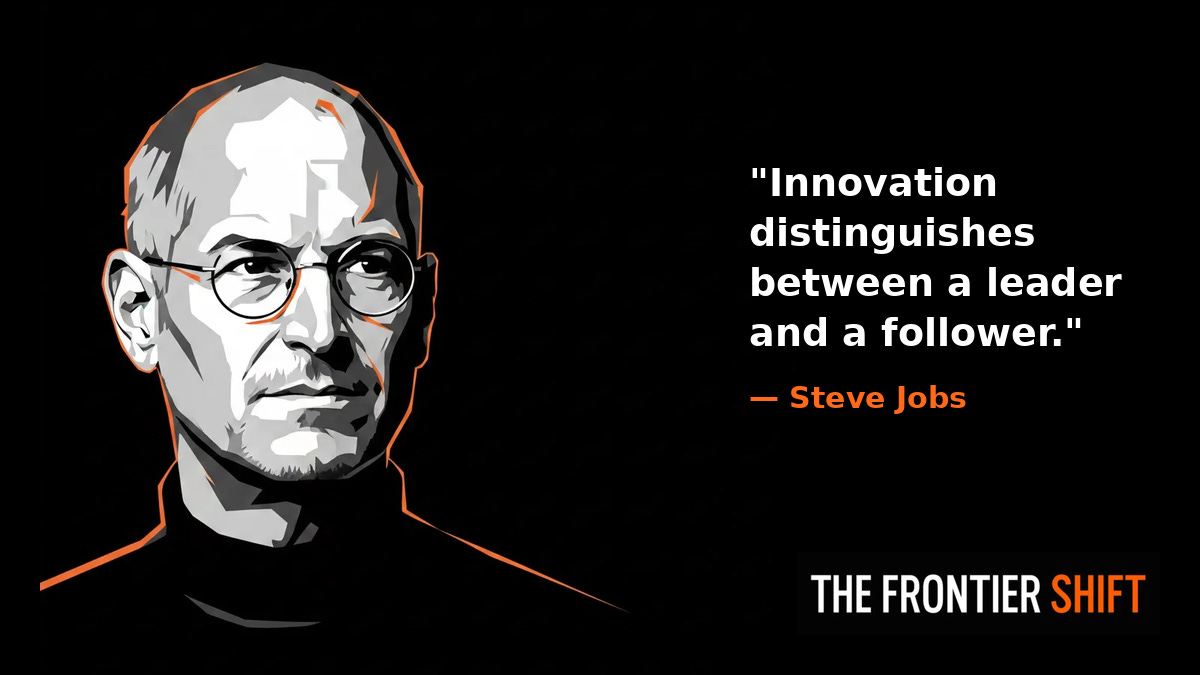
“Innovation distinguishes between a leader and a follower.”
— Steve Jobs
About Me
I’m Phil Nowak, a Lead Principal Customer Success Manager at Salesforce, where I’ve spent 11 years working with multi-billion dollar global companies across nearly every industry.
I’m a graduate of MIT’s Artificial Intelligence Business Strategy program, Salesforce’s Accelerate Leadership Program, and I majored in Economics with a Business Minor at Indiana University Bloomington. Go Hoosiers!
I write The Frontier Shift to help people understand how technology, capital, and infrastructure are actually reshaping the world.
Feedback? Reply to this email, send me a message, or connect with me below.
LinkedIn | X | Subscribe | 📍 Chicago
Views expressed are my own.
Everything seems friendly until it’s not. Remember Eric Schmidt was on Apple’s board from 2006 to 2009 until there was a clear conflict of interest between the iPhone and Android.